The self imposed reduction in social activities at the Home by the Sea, gives me a great reason to research how to improve my photographic skills. I regularly host Friendly Fridays over at my main blog, Something to Ponder About, and was tempted to join Travel Talk’s challenge which runs each month with a different focus point.
Texture
In examing texture in photography, I varied the light, angle and composition to enhance the subject. As these photos are from my archive, I had to edit them to enhance the texture and composition, by using the cropping function. Further, I increased the clarity in a photo editor to bring out more texture in the mushroom caps and adjust the light source.
Fungi are a great subject for photographers.
I love the structure of these small mushrooms caps. The stalks look as though they would not be able to hold a feather. The caps are so delicate, yet potentially so poisonous.
If anyone knows their scientific know, I would be glad to add that to the photographic file information.
Over at Traveltalk you will find the photographic challenge wherein we are examining textures in our photography.
Minerals in our diet. Not something we give much thought too, is it? But should we? What does it matter if we are deficient in a little, say, magnesium?
It turns out to be pretty important for our bodies! Without enough magnesium, one could suffer:
foot pain
muscle cramps
migraines
high blood pressure
anxiety disorders
asthma
chronic fatigue
irritable bowel syndrome
in severe cases: cardiovascular disease in the form of cardiac arrhythmia, or angina.
low magnesium has been implicated in diabetes.
Magnesium can help control premenstrual syndrome or (PMS), especially where it concern breast tenderness, headache and irritability.
Magnesium can also be useful in relaxing muscles and preventing muscular cramps, during exercise.
“It is generally recommended that women with severe PMS symptoms take 300 to 500 milligrams a day for the two weeks before and during menstruation. The RDA for magnesium is about 300 milligrams, but at least twice as much is needed to see preventive and therapeutic benefits. Supplements are definitely needed to prevent osteoporosis. Women over 50 that are not taking Hormone Replacement Therapy (HRT) probably need about 750 milligrams of magnesium every day, an amount that is hard to get through the diet alone,” according to
Oral supplements are readily available, but it is best to include as many magnesium-rich foods, into the diet, as you can, especially if you fall in to the post menopausal age group.
Dairy products, like non-fat yoghurt
Fish particularly tuna and halibut
Dark leafy greens, such as kale, mustard greens, collards, chard (silverbeet), dandelion greens, sorrel, watercress.
Foods very high in magnesium include:
Brazil Nuts,
Pumpkin and Squash seeds
Sesame seeds
Spinach
Broccoli
Almonds
Walnuts
Beans
Peas
Apricots
Avocados
Bananas
Molasses
Brown rice
Cantaloupe
Figs
Garlic
Grapefruit
Peaches
Tofu and soybeans
Wheat, and whole grains
Dark chocolate (Eating magnesium can be tasty too!!)
Several herbs, such as chamomile, cayenne, fenugreek, lemongrass, licorice, paprika, parsley, peppermint, and sage also contain magnesium.
Worth noting also is, “The consumption of alcohol, diuretics, anticonvulsants, antibiotics, digitalis, and lithium can interfere with magnesium absorption. People taking these medications should speak with their doctor about supplementing. Other factors that can decrease magnesium absorption are elevated levels of fluoride, zinc, and vitamin D; diarrhea; high-fat and high-protein diets; consumption of large amounts of cod liver oil; and frequent consumption of foods high in oxalic acid, such as cocoa, rhubarb, spinach, and tea,”
How could I not? It would soon be time to leave and the Wellington wind wasn’t giving up, no matter how hard I wished it would stop. Gusting at around 48 knots, it had been howling for most of the night, breaking my sleep and leaving me anxious for the day ahead. Adding to my anxiety was the knowledge that I had to catch the morning ferry across the notorious Cook Strait, to the South Island of New Zealand.
We were due to sail on Arahura Inter-islander, from Wellington to Picton, that takes passengers from the bottom of the North Island of New Zealand to the tip of the South Island. Not that far, in terms of distance, but far enough given the awful weather and a ferry crossing synonymous with wild seas.
The first ferry of the morning had been completely cancelled, due to the deteriorating weather conditions, so when I arrived at the Aotea Quay, I glanced at the sign describing the 10 am sailing conditions, as ‘HEAVY,’ and gulped.
Would we survive this, I pondered as we loaded our bags onto the check-in counter? Was it too late to change our minds?
The weather seemed okay for the minute, moored in the protected expanse of Wellington’s harbour, but the foreboding words of my cousin’s husband, rang loudly in my ears, “You’ll be okay for the first hour!” he’d declared, the previous night.
Eek! It was a three hour journey.
ferry to Picton
Nevertheless, we headed on board and explored a bit of the boat; the apparently jovial mood of the fellow passengers, infectious. None appeared overly worried about sailing conditions. As I perused the various seating areas, keen to find a seat with views of the ocean, I spotted a bar, several bars in fact, and noted it was well patronised by various male patrons.
Did people really drink alcohol, when the sea promised to get rough? I thought.
The ferry wasn’t a small boat; in fact, it housed a large cafeteria style kiosk, souvenir shop and a full scale cinema. The thought of watching a movie in the dark, whilst the ship was being tossed around in Neptune’s domain like a top, was more terrifying for me than being thrown overboard! Instead, we settled on a window seat, on the lower passenger deck, watching the cars and trucks drive nonchalantly into the vessel’s nether regions.
I noticed the build sign informed all, who took interest, that the ferry had been built in the Danish town of Aalborg. Good Danish design was reassuring. The Vikings were used to storms at sea, weren’t they? Even so, I couldn’t help but check the state of the weather, again, and how many life rafts the ship had – just in case. I tried to avoid looking to the horizon which still confirmed a bad storm was approaching. Darn.
But the little girl was happy. What an adventure, she innocently thought posing for the camera. Unfortunately, she was about to change her mind.
When the Captain’s voice crackled over the loud speaker, welcoming passengers aboard, he warned us our crossing would get, “a bit rough out there,” once we were in the open sea. In fact, he said, it was “blowing a gale and we should expect 8 – 10 metre waves.”
Good Lord, I thought, muffling a gasp, this was a bit different to an afternoon outing on the bay, home in Australia.
The swell became heavier, waves crashing over the bow, winds had increased and the boat started listing to and fro like a inflatable toy in a baby’s bath. At times, the hull would rise up in to the air before slamming down hard, against the waves so loudly I feared it would surely break in two. Terrifying.
The passengers who had been enjoying a tipple at the bar filed hurriedly past us towards the rear of the boat, looking a tad green around the gills.
Glass and bottles crashed to the floor while the crew stumbled around handing out ice chips to anxious passengers, including said daughter. She was terrified, vowing never ever to go on a boat again. I decided to move upstairs with her. A dangerous move I would not repeat again.
Have you ever tried to climb the metal stairs of a ship, holding a seven year old securely around the waist, a heavy back pack strapped to your back, (which changes one’s centre of gravity completely), whilst simultaneously opening one of those heavy metal doors the ships have to hold back the water, in the event the boat sinks. You know the ones with the metal ring you turn on them? What are they called?
All this and also protect your daughter from being squashed in said door, as the boat listed to and fro, swinging the heavy door open and shut. I had no wish to have my fingers and toes severed by the wildly swinging chunk of metal.
I daren’t go out on deck to take a photo, as I was fearful I’d be thrown overboard by the violent metronome like lurches of the vessel. In those seas, I would not stand a chance of survival.
This was the last photos I snapped through a crack in the outside door. It was a difficult job to hold the door open and not be slammed in the back with it when the boat listed in the opposite direction. I would not be taking any more photos.
Taking the photo did however, momentarily take my mind off my stomach which was doing its best impression of a cirque de soleil trampoline specialist.
IWith no more photos to take and my time spent reassuring my daughter it was all fine and dandy, I phoned my husband, (the Moth), back in Australia, to say goodbye, in case we didn’t make it to the South Island. He laughed at me over the phone – encouragingly so though, as he was positive that we would prevail.
I reminded him of the Wahine disaster. He scoffed. It would have been quite a different matter, if he was in situ beside me on that ferry, I assure you!
Just when I thought I was going to have to re-visit those eggs I’d eaten for breakfast, a second time around, I spotted the heads of Queen Charlotte Sound and the angry sea began to simmer considerably, the closer we got. We were going to make it.
I had never been so glad to see land.
Amazingly so – it was completely calm on the other side of the heads!
And the two sounds are really stunning.
Imagine living there
Our disembarkation port of Picton, was in sight. We had survived a horror ferry ride.
To this day, I cannot watch a movie with a plot centered around a ship capsizing or battling stormy seas. I just cannot.
Next time I would fly into the South Island.
Have you ever experienced a frightening ride, where you feared for your life?
Firstly, this is not a post about Corona, so if you want something a little juicier, you might check out some recent posts on StPA.
Ju-Lyn’s wonderful Orange and Blueberry Cake
Truthfully though, I have to admit that I was tempted to call this Corona cake, not just because I cooked it for the first time, in these panic-ridden days, when the Corona virus is causing havoc around the world, but primarily because of the stunning way my blogger friend, Ju-Lyn presented it. There are several layers to this cake and it is decorated with blueberries like a crown – (hence the reference to ‘Corona’, which means ‘Crown’). But then, I was worried that Ju-Lyn might take offence at my referencing something like that, so I will call it- Ju-Lyn’s Mini Cakes.
Ju Lyn blogs at All Things Bright and Beautiful and very kindly shared her recipe for this delicious sounding cake with me, before it was posted on her own blog. That is a measure of her kindess. Thanks, Ju-Lyn!
Cake Recipe
I have to admit that I changed the original aesthetic slightly, as I was a little pushed for time, and I am not a big fan of butter cream icing, even though the Moth, (the “Man of the house”), just loves it. [He does better to watch his calories, you see.]
Ju-Lyn’s Orange Blueberry Mini Cakes
Ingredients
130 g Self Raising Flour
110 g Caster Sugar
1 egg
1/4 teaspoon baking powder
Zest of one orange and a little juice
Pinch of Salt
150 g Sour Cream
40 g melted butter
50 g fresh blueberries
Few extra blueberries for cake toppers
Method
Mix flour sugar and baking powder together in a bowl
Mix together eggs, the zest of orange and a little juice – I used a teaspoonful
Add wet ingredients to dry and mix throughly
Mix in melted butter and sour cream.
Gently fold in the blueberries
Place in muffin trays, lined with paper cases, if you wish.
Scatter a couple of extra blueberries on top of each cake.
Bake at 160 degrees Celsius for 25 minutes
Testing with a skewer to see if the cake is cooked.
Allow to cool and serve with a dusting of icing sugar if desired.
Insider Tips:
You can make one large cake with this mix but bake for 40 – 50 minutes.
Double the ingredients for a layer cake and ice all over with buttercream.
More Cake Recipes
I have previously posted another of Ju-lyn’s wonderful recipes for Honey Spice Cake, which is now a staple on Sunday mornings, at the Home by the Sea.
Recently, I wanted to make one of Ju-Lyn’s fabulous cake recipes and only had jumbo sized eggs that I had purchased at a farmer’s market.
Would it matter if I used them? I was making a cake, after all and I didn’t want it to flop as our new neighbours were coming over, for morning tea.
After a little research, it seems that size does matter, when it comes to using eggs in cooking.
Substituting Eggs in Baking Recipes
If you are using Jumbo eggs and the recipe calls for large or extra large:
Break the eggs into a bowl and lightly beat until both yolk and white is combined. Measure off the amount of the egg mix that would equate to the volume of egg the recipe requires.
1 large egg, beaten = 3-1/4 Tbs.
2 large eggs, beaten = 6-1/2 Tbs.(1/4 cup plus 2-1/2 Tbs.)
3 large eggs, beaten = 9-2/3 Tbs.(1/2 cup plus 1-1/2-Tbs.)
4 large eggs, beaten = 12-3/4 Tbs.(3/4 cup plus 1 tsp.)
5 large eggs, beaten = 1 cup
Eggs in Non Baking Recipes
In non-baking recipes, if you’re substituting only one, two, or three extra- large or medium eggs for large eggs, simply make a one-to-one direct substitution. Beyond that, use these equivalents:
• in place of 4 large eggs, use 4 extra-large or 5 medium • in place of 5 large eggs, use 4 extra-large or 6 medium • in place of 6 large eggs, use 5 extra-large or 7 medium
Eggs + yolks: Extra YOLKS means more fat which gives the cake ultra moistness! Add the amount of eggs called for in the recipe but add two extra egg yolks. The extra yolks add the density and moisture you’d find in a bakery cake!
Egg WHITES: Not adding the yolks to the cake makes the cake fluffy and whiter!
To clarify: Eggs + yolks: Extra YOLKS means more fat which gives the cake ultra moistness! Add the amount of eggs called for in the recipe but add two extra egg yolks. The extra yolks add the density and moisture you’d find in a bakery cake!
Milk: Add MILK, not water, when your mix calls for liquid. The milk adds density, fat and, most importantly, extra flavor to your mix. So add extra tablespoon or so of butter if you are short on milk.
Egg WHITES: Not adding the yolks to the cake makes the cake fluffy and whiter! But taking out the egg yolks removes fat so add an extra two tablespoons of butter above (or, one tablespoon of melted butter per each removed egg yolk).
Vanilla: Freshen up the cake mix with a dash of VANILLA EXTRACT! Add 1/2 teaspoon of vanilla extract for enhanced flavor. I feel the cake keeps better with vanilla in it, but that could be false.
Melted Butter: Use BUTTER instead of oil. They’re both fat but butter has better flavor! Muffin recipes call for vegetable oil. Melting butter in the microwave, as this adds a richness and depth of flavor.
Sprinkle with Sugar: Sprinkling the top with SUGAR not only gives it a sweet crunchy texture to yoru cake, but the weight of the sugar prevents the cake from rising too much while it bakes.
You can even make a layer cake or one for now and one for later. Pour the cake batter into two cake pans and sprinkle the top with sugar. It’s important for your cake to rise but you don’t want it to rise too much or you will have to cut off a lot of it if you layer it.
Results
It worked out beautifully at the Home by the Sea.
Recipe to follow shortly. As it is Ju-Lyn’s recipe, I wish to wait for her to publish it first.
There you were, sitting by the side of the lake, on a saturday night, admiring the moon reflecting on the water, the tide gently lapping a romantic lullaby in your ears.
The night was young and you got carried away in the moment, perhaps with your loved one by your side?
But did you remember to take your rubbish with you, when you left?
This sight greeted me on my walk this morning at 6am.
An almost empty can of whisky, a plastic bottle half filled with juice, and some leftover food in a single-use plastic bag.
Dear Litterbug:
If I knew where you lived,
I would gladly return your left belongings to your door.
Did you not realize perhaps that this lake opens out to the sea? A sea where marine animals and fish live? Someone’s else’s home?
When you finished eating your take out meal, (or take away, if you are an Australian), did you not walk directly past the bin? It takes but a second, to look and check for a nearby rubbish bin/trash can and dispose of your waste in a bin that waits there just for that sole purpose. A bin, which has been put there for your convenience. A bin which you might even pay for, with your taxes, or as part of your council rates.
Did you not see the location of the bin was a mere 10 – 20 steps behind you, depending on your height, of course?
Your thoughtless act of carelessness contributes to contamination of our waterways with plastic wastes.
Thanks to you, it will take 20 years for that one plastic bag to break down in the environment and even after that, will still pose a threat to fish and other aquatic life, entering their bodies in the form of micro-plastics.
Fish or aquatic animals, that you, yourself, might eat one day. This means you will also ingest micro plastics in to your gut. Just like this whale. Plastic didn’t do him any good.
If you are a turtle, whale, dugong, or larger marine animal, you might ingest the whole plastic bag, and who could blame you, as bags do look like jelly fish. For these creatures, the consequences are fatal.
All because you forgot or couldn’t care, to dispose of your leftover waste in a responsible manner.
Plastic Waste:
According to an estimate, every year Americans use approximately 1.6 million barrels of oil just for producing plastic bottled water. Plastic waste is one of many types of wastes that take up to 1000 years to decompose in landfills.
Plastic bags take 10-20 years to decompose, while plastic bottles take 450 years.
Aluminum Cans:
Every minute, every day, more than 120,000 aluminum cans are recycled only in America. But, at the same time, every three-months, enough aluminum cans are thrown away in America that can rebuild the entire American commercial air fleet.
Aluminum cans take 80-200 years in landfills to get completely decomposed.
Join me in documenting the amount of waste you find in your local environment.
Make people take notice.
Take a Helping Hand Grabber Tool, (so that you don’t have to touch the rubbish), and dispose of it responsibly, for the folks who haven’t yet developed that level of thoughtfulness.
Bushboy is a fellow Aussie blogger whose photo enthusiasm extends to wanting to see other blogger’s final photos on their phone, for the month of February.
Alright, Brian. I’ll play along.
Meet Billie, our resident frog. Usually green, but brown tonight, only green around the gills, so to speak.
Isn’t he the cutest?
Just so you know he is a green frog, here he is with his green suit on.
Building a new house last year, meant that I had the opportunity to purchase the latest and greatest cooktop and oven.
My new Kitchen
I was lucky that the builder had a 90 cm oven as standard equipment and I do love it. I do like to bake a lovely morning tea so the oven get used a lot.
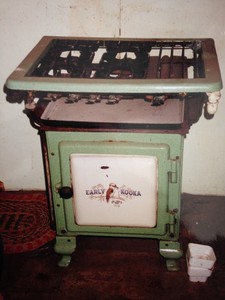
The cooktop in the house design, was gas as a standard addition, and I fondly remembered the teenage days of cooking on an ancient ‘Kooka’ gas stove, in my ‘haunted’ house – highly efficient and reliable. However….
Kooka Stove
I worked out pretty quickly that gas wasn’t great for someone living in the tropics. The phrase sweating away over a hot stove, was more real than I would care to admit, when I discovered the open flame of the gas cooktop, I was cooking with in my rental accommodation, caused the ambient temperature in the kitchen on a 36 degree celsius, overly humid, day to ignite to levels bordering on purgatory.
Thus, an upgrade to induction cooking seemed like a sensible move than a gas stove.
The new induction cooktop
The trouble is I had to purchase all new cookware as not all saucepans operate with the induction technology, which requires saucepans to be magnetic, to work.
I splurged a little and purchased two new non stick Induction friendly frypans, one a Raco and the second a Tefal Jamie Oliver style pan, as well as three beautiful induction freindly, non-stick saucepans, a lovely set made in France by Ingenio, with a detachable handle that could be used in the oven or cooktop, or served at the table.
So versatile, I thought.
Imagine my schock when I read that there was a problem with non-stick cookware.
A big problem….
Someone in the Estate by the Sea, where I live, had three parrots that lived inside their home. The owner was cleaning his self-cleaning oven, last week, which requires turning it to its maximum heat for an extended time in order to self clean the interior walls, of the oven.
Suddenly all three of his large parrots, including an African Grey parrot, (which can live to 200 years), developed breathing problems and died within 20 minutes of each other, ostensibly from the polytetrafluoroethylen fumes, emitted from the oven in its self-cleaning mode.
To back up his claim I did a little research:
…. the material used in most nonstick cookware, …the polytetrafluoroethylene (PTFE) coating on the pans turns into toxic Perfluorooctanoic acid (PFOA) at high heat, making it dangerous both for the cook and for diners.
It was in 2004 that the American Environmental Protection Agency (EPA) discovered the potential cancer-causing chemical used in the production of Teflon and filed complaints against the maker, DuPont.
At that time, a synthetic chemical called perfluorooctanoic acid, known as PFOA or C8 for short was used in the production of Teflon, however, it was phased out in the USA, in 2013 as PFAS chemicals, which includes PFOA and PFOS, had been linked to cancer and numerous other health concerns.
Despite DuPont completely eliminating the use of PFOA from use in their products, according to a spokesperson for the Australian Competition and Consumer Commission (ACCC), there is a wide range of products supplied in Australia that still include the related chemicals.
This week, I purchased a PFOA free frypan and worryingly note the Ingenio saucepans are now a discontinued product, in the larger retail stores. I shall have to ensure these saucepans are never used on high heat or should I ditch them and get stainless steel, all over again, for the Home by the Sea?
Do you use Non stick cookware, or use water resistant, stain resistant products?
There are more similarities between people from diverse cultures than there are differences. We can learn so much from each other if we keep an open mind.
Amanda Mac – Forestwood
Benefits of Writing a Blog
One of the best things about blogging is that it is not limited by geographical boundaries.
Unless you are new to The Home by the Sea , or my primary blog, S.t.P.A, you’ll more than likely know that I live down ‘under,’ at the ‘bottom end’ of the world. Down here in Australia, we can sometimes feel the tyranny of distance isolating us, from the rest of the world and a different time zone doesn’t help to foster good communications, at all.
Yet, the blogger community with its members spread across the globe, are a wonderfully diverse group. As an Australian blogging offers me the chance to expand my perspective, to hear and share different opinions and thoughts, that I’d otherwise not have been exposed to, and to feel the rest of the world is just that little bit closer, all without leaving my desk.
Yet it is still a virtual world, isn’t it?
Meeting other Bloggers
Exchanging Ideas with Ineke
Thus, when an opportunity arises to meet another blogger, I am pretty keen. Previously, I had met Inekewhen travelling in New Zealand, and both of us were surprised to find that, although we originated from different backgrounds, the connection we felt towards each other was surprisingly strong. A similar meeting with Lorelle, in Melbourne, confirmed blogger friends are often on a very similar wavelength.
But did I know Catherine from Cyranny’s Cove, well enough for us to click? I knew little of her life in Canada, even though I had followed her blog for some time. Cyranny was coming all this way to Australia and visiting Brisbane, so I was super keen not to miss the opportunity to chat i.r.l. to another blogger and furthermore, to someone who loves Denmark, as much as I do. In fact, that is how I discovered Cyranny’s blog – browsing the wordpress reader for posts on Denmark, (as I sometimes do)!
Cyranny’s time here was short, and we were hampered in communications by Australia’s unfortunately medieval internet networks, so it wasn’t so easy to find time to meet. Especially since I have recently moved some 30 km away from the city, to the Home by the Sea, but eventually we settled on a time and date and met for breakfast in the city.
This year, Australia has experienced an extremely hot summer and with the fallout from the recent natural disasters of bushfire and floods, I was relieved to hear Cyranny and her partner tell me they had been lucky enough not to have their travel plans disrupted and had in fact, reached the chosen destinations without major hiccups, even experiencing some “up close and personal,” encounters with our unique wildlife that some Australians have not yet had for themselves. That was fun to hear.
Friends Across the Waves
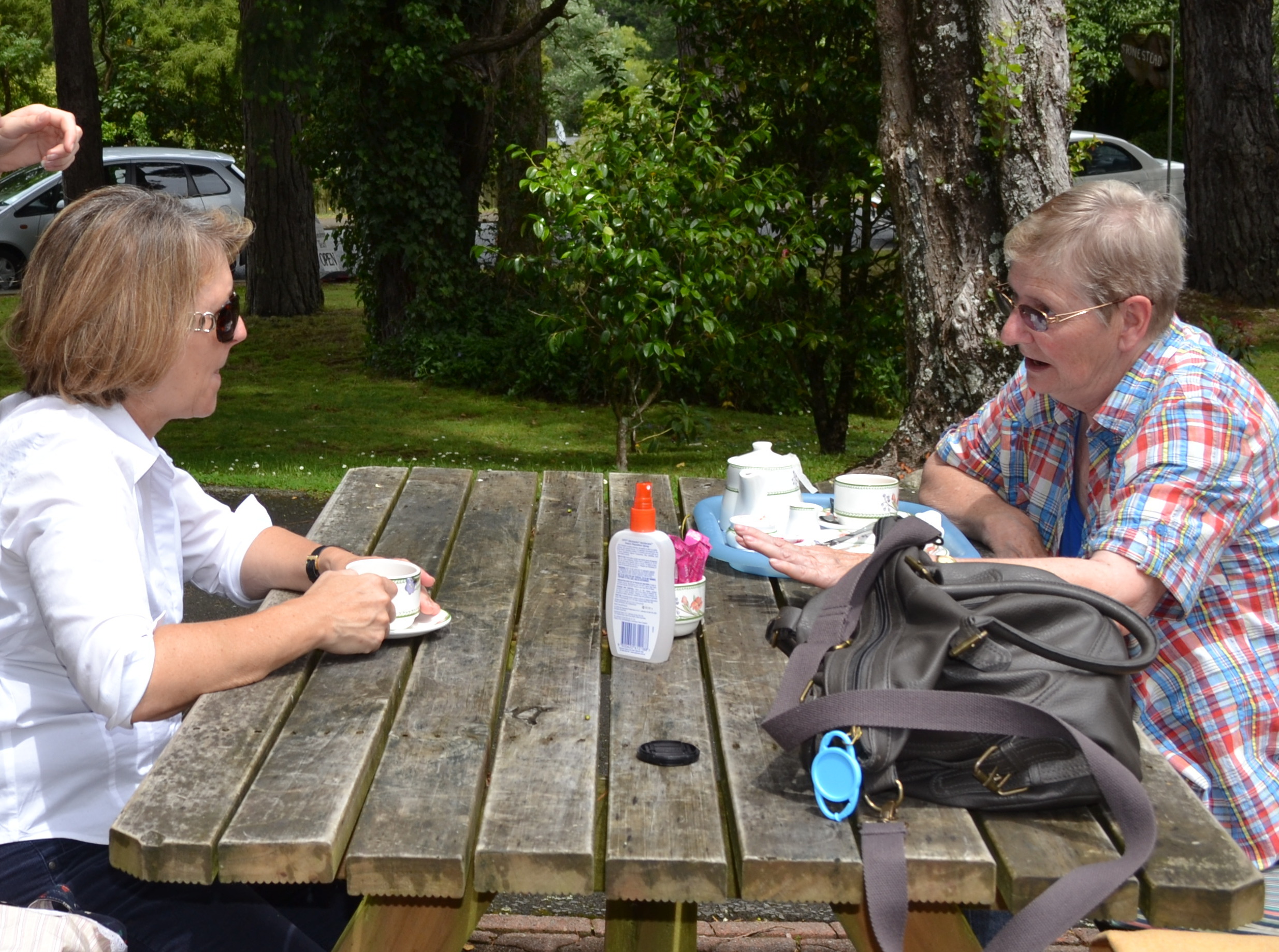
Meeting Cyranny ended up feeling like I was having coffee with an old friend – the conversation was easy and comfortable and we settled down to enjoy breakfast, with the added bonus of a nice outlook over the Brisbane River.
Although our writing allows us to enjoy interacting with a completely different blogger set, we do share similar enjoyment in keeping our blog, and I found it so very interesting hearing her thoughts on Australia and the fun things they both had experienced, along the way.
Brisbane’s Sights and Attractions
As it is February in Brisbane, the year’s absolute worst month for heat and humidity, we then took a very warm, but pleasant walk along the riverside walkways and through the city’s Botanic gardens.
With the humidity rising rapidly, seeking out the shady colonnades of flowering Bougainvillea vines, at South Bank, seemed like a sensible idea.
I dutifully highlighted various points of interest, along the way: including the State Parliament building, a remnant of French Renaissance sophistication in the antipodes, the two Universities, the famous “City Beach”, and more importantly on a hot summer day, the New Zealand Ice Cream stand, with the totally awesome and weirdly named ‘Hokey Pokey,’ Ice Cream flavour. If you haven’t yet discovered Hokey Pokey, you are really missing something!
Hokey Pokey Ice Cream
Being the local, I also suggested they might like to consider a ride on the City Cats, (Public Catamarans Boats), that traverse the river that night, in order to visit Eat Street – an open air eatery upriver, at Hamilton. Eat Street comprises 180 or more stalls, all serving multi-national cuisine from modified ex-shipping containers. Along with music and twinkling lights, it is a unique experience for dinner on a hot summer night, in Brisbane and I thought might be fun for my Canadian friends.
They were also keen to visit the Lone Pine Koala Sanctuary – somewhat of a mandatory obligation when you visit Brisbane, as it is one of the few places operating since 1927, where tourists can get to hold a koala and hang out with the kangaroos and wallabies. I don’t want to divulge too much more about that, as Cyranny will no doubt tell you more when she arrives back home.
I was a little sad to wave goodbye so soon to Cyranny and her partner, but they had a date, to keep, with a koala. I wish them safe travels back to their home. I do hope they know they are welcome at our Home by the Sea.
Have you met any other blogging friends? How was your experience? Did you find many commonalities?

















 A Home by the Sea
You must be logged in to post a comment.