When the sun set on another Mother’s Day, I thought more about what is important to me and what I am grateful for. My kids are now all adults so gifts are unimportant and somewhat redundant.
Is Mothering itself a gift?
Why do we give gifts on Mother’s day?
I had to question hard the motivation behind this tradition and ask why we continue to give gifts as a social convention, in an affluent society.
Traditions of Mothers Day
A visit to or from family is more and more a tradition on Mothers day.
It has become even more of a social event this year as the lifting of Covid restrictions coincided with weekend of Mother’s Day.
Is the spirit of Mother’s Day encapsulated in a friendly smile or gesture from a family member, friend or neighbour?
It might be one or all of those things, but the most important thing is to feel healthy and content on mind and spirit.
Gifts then, do seem redundant and more of a symbol than a necessary purchase.
Gratitude in 2020
I am blessed that I have had a comfortable life. This is not to say I have not been without quite a bit of heartache, bad luck or troubles in my life and despite these matters, I cannot say that I have not been comfortable, for the most part.
In hindsight, many of my problems are just inconveniences or issues that must be solved, or persevered with, until they sort. I have been lucky, and pushed through until the sadness passed to find resilience and maintain hope.
I have hope.
I have freedom.
I have achieved certain goals and have new challenges ahead that I am enthusiastic about.
I have job satisfaction. I have a job and income, although for how long is never guaranteed, anymore, especially at my age. For that, I am grateful. Work can be a privilege we might take for granted.
I have the bountiful emotional returns of raising children, with all its fatigue, responsibilities and worries, but moreover, the joys and pride of raising three little people on this planet.
I got to travel to some pretty special places and spend times with many different people from all over the world.
I was fortunate to have the opportunity to learn a language other than English.
I was lucky enough to be in a postiion to design a beautiful home and live by the sea.
This was my morning view.
How can one not feel in awe of nature’s magnificence?
I have a home and family.
And this is the place where I chose to spend this year’s Mother’s Day and the rest of my life.
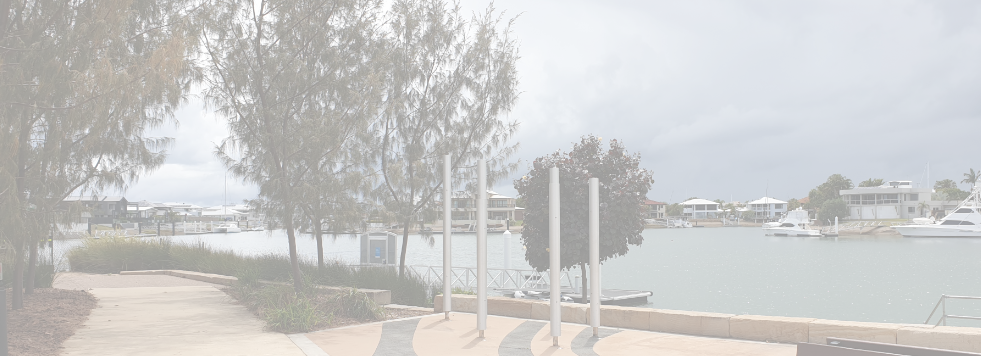
I walk daily to the beautiful lake near our home by the sea.
There are many new homes being constructed in this area at present, thus there is always something new to see along the way. But the real attraction is the birdlife in this area, such as this Heron.
As a Chinese symbol, the Heron represents strength, purity, patience and long life.”
I hope this might mean that both the Heron and I have a long life!!
Sometimes we even see the local kangaroos and their joeys in this area. Meanwhile, the Heron continues stamping the slightly soggy ground on the street’s verges looking for some food.
Today, however, we took a long walk in the opposite direction to the roos and away from the foraging Heron.
A new sports facility has opened up. In the current environment, this means that the ground is open, but as the football competition has been closed for the season, I am not sure if you could call it open, but officially it is.
We continue walking from the main road towards the “basin,” or pond. This is a mini wetland area that has attracted a variety of birdlife.
With a larger wetland environmental area opposite, the birds have plenty of food sources.
On closer inspection we could see cormorants, drying their wings in their familiar crucifix-like gesture, welcoming the morning rays of sunlight as well as a Black swan and the odd Ibis. A Willy Wagtail pair tweeting their way along the path in front of us, danced lightly on the ground. They were gone before I could photograph them.
We saw Moorhens chicks stepping their way through the waterlily pads, a perfect adaptation to the watery environment.
This Mother was calling her wayward adventurous chick, and had to chase after her to give her some food.
The cutest of all were these little ducklings. Covered with down, they dipped their heads under the water, but never really that far from Mother Duck.
New Sports Facility for Australian Rules Football
This football field will be a training ground for the local Australian Rules Football club. If you are not Australian, you might not know of this game. Developed as a way for the cricket players to maintain their fitness in the off-season, ‘Aussie Rules,’ is played on a large oval with four posts at either end. It is basically a kick and catch type of game, with elements of basketball thrown in for good measure and a few penalties along the way to add excitement. The players are tall and lean, and very muscular, and I might add, very highly paid.
The Football Clubhouse looks forlorn and vacant and I think of the term ‘white elephant’ when I look at it. It awaits the demise of Corona as we all do.
A storm was heard in the distance, towards the Northern coast. Highly unusual for this time of year, it did not threaten us, but we did get to see some gorgeous coloured sky and cloud formations.
The simple pleasures of life.
Some days I feel that the lockdown won’t ever be over. I push that thought aside and continue my walk from the ground back towards the estate.
Just before we hit suburbia again, there is an Eco-corridor. The Magpies are up early hunting for their breakfast and I am getting pretty peckish too.
The early bird gets the worm, I hope. Can you see four birds in these pictures? Three were magpies and the fourth, an Indian Myna bird.
That completes Monday’s Walk at the Home by the Sea. Thanks for walking along with me in the virtual sense.
How could I not? It would soon be time to leave and the Wellington wind wasn’t giving up, no matter how hard I wished it would stop. Gusting at around 48 knots, it had been howling for most of the night, breaking my sleep and leaving me anxious for the day ahead. Adding to my anxiety was the knowledge that I had to catch the morning ferry across the notorious Cook Strait, to the South Island of New Zealand.
We were due to sail on Arahura Inter-islander, from Wellington to Picton, that takes passengers from the bottom of the North Island of New Zealand to the tip of the South Island. Not that far, in terms of distance, but far enough given the awful weather and a ferry crossing synonymous with wild seas.
The first ferry of the morning had been completely cancelled, due to the deteriorating weather conditions, so when I arrived at the Aotea Quay, I glanced at the sign describing the 10 am sailing conditions, as ‘HEAVY,’ and gulped.
Would we survive this, I pondered as we loaded our bags onto the check-in counter? Was it too late to change our minds?
The weather seemed okay for the minute, moored in the protected expanse of Wellington’s harbour, but the foreboding words of my cousin’s husband, rang loudly in my ears, “You’ll be okay for the first hour!” he’d declared, the previous night.
Eek! It was a three hour journey.
ferry to Picton
Nevertheless, we headed on board and explored a bit of the boat; the apparently jovial mood of the fellow passengers, infectious. None appeared overly worried about sailing conditions. As I perused the various seating areas, keen to find a seat with views of the ocean, I spotted a bar, several bars in fact, and noted it was well patronised by various male patrons.
Did people really drink alcohol, when the sea promised to get rough? I thought.
The ferry wasn’t a small boat; in fact, it housed a large cafeteria style kiosk, souvenir shop and a full scale cinema. The thought of watching a movie in the dark, whilst the ship was being tossed around in Neptune’s domain like a top, was more terrifying for me than being thrown overboard! Instead, we settled on a window seat, on the lower passenger deck, watching the cars and trucks drive nonchalantly into the vessel’s nether regions.
I noticed the build sign informed all, who took interest, that the ferry had been built in the Danish town of Aalborg. Good Danish design was reassuring. The Vikings were used to storms at sea, weren’t they? Even so, I couldn’t help but check the state of the weather, again, and how many life rafts the ship had – just in case. I tried to avoid looking to the horizon which still confirmed a bad storm was approaching. Darn.
But the little girl was happy. What an adventure, she innocently thought posing for the camera. Unfortunately, she was about to change her mind.
When the Captain’s voice crackled over the loud speaker, welcoming passengers aboard, he warned us our crossing would get, “a bit rough out there,” once we were in the open sea. In fact, he said, it was “blowing a gale and we should expect 8 – 10 metre waves.”
Good Lord, I thought, muffling a gasp, this was a bit different to an afternoon outing on the bay, home in Australia.
The swell became heavier, waves crashing over the bow, winds had increased and the boat started listing to and fro like a inflatable toy in a baby’s bath. At times, the hull would rise up in to the air before slamming down hard, against the waves so loudly I feared it would surely break in two. Terrifying.
The passengers who had been enjoying a tipple at the bar filed hurriedly past us towards the rear of the boat, looking a tad green around the gills.
Glass and bottles crashed to the floor while the crew stumbled around handing out ice chips to anxious passengers, including said daughter. She was terrified, vowing never ever to go on a boat again. I decided to move upstairs with her. A dangerous move I would not repeat again.
Have you ever tried to climb the metal stairs of a ship, holding a seven year old securely around the waist, a heavy back pack strapped to your back, (which changes one’s centre of gravity completely), whilst simultaneously opening one of those heavy metal doors the ships have to hold back the water, in the event the boat sinks. You know the ones with the metal ring you turn on them? What are they called?
All this and also protect your daughter from being squashed in said door, as the boat listed to and fro, swinging the heavy door open and shut. I had no wish to have my fingers and toes severed by the wildly swinging chunk of metal.
I daren’t go out on deck to take a photo, as I was fearful I’d be thrown overboard by the violent metronome like lurches of the vessel. In those seas, I would not stand a chance of survival.
This was the last photos I snapped through a crack in the outside door. It was a difficult job to hold the door open and not be slammed in the back with it when the boat listed in the opposite direction. I would not be taking any more photos.
Taking the photo did however, momentarily take my mind off my stomach which was doing its best impression of a cirque de soleil trampoline specialist.
IWith no more photos to take and my time spent reassuring my daughter it was all fine and dandy, I phoned my husband, (the Moth), back in Australia, to say goodbye, in case we didn’t make it to the South Island. He laughed at me over the phone – encouragingly so though, as he was positive that we would prevail.
I reminded him of the Wahine disaster. He scoffed. It would have been quite a different matter, if he was in situ beside me on that ferry, I assure you!
Just when I thought I was going to have to re-visit those eggs I’d eaten for breakfast, a second time around, I spotted the heads of Queen Charlotte Sound and the angry sea began to simmer considerably, the closer we got. We were going to make it.
I had never been so glad to see land.
Amazingly so – it was completely calm on the other side of the heads!
And the two sounds are really stunning.
Imagine living there
Our disembarkation port of Picton, was in sight. We had survived a horror ferry ride.
To this day, I cannot watch a movie with a plot centered around a ship capsizing or battling stormy seas. I just cannot.
Next time I would fly into the South Island.
Have you ever experienced a frightening ride, where you feared for your life?
There you were, sitting by the side of the lake, on a saturday night, admiring the moon reflecting on the water, the tide gently lapping a romantic lullaby in your ears.
The night was young and you got carried away in the moment, perhaps with your loved one by your side?
But did you remember to take your rubbish with you, when you left?
This sight greeted me on my walk this morning at 6am.
An almost empty can of whisky, a plastic bottle half filled with juice, and some leftover food in a single-use plastic bag.
Dear Litterbug:
If I knew where you lived,
I would gladly return your left belongings to your door.
Did you not realize perhaps that this lake opens out to the sea? A sea where marine animals and fish live? Someone’s else’s home?
When you finished eating your take out meal, (or take away, if you are an Australian), did you not walk directly past the bin? It takes but a second, to look and check for a nearby rubbish bin/trash can and dispose of your waste in a bin that waits there just for that sole purpose. A bin, which has been put there for your convenience. A bin which you might even pay for, with your taxes, or as part of your council rates.
Did you not see the location of the bin was a mere 10 – 20 steps behind you, depending on your height, of course?
Your thoughtless act of carelessness contributes to contamination of our waterways with plastic wastes.
Thanks to you, it will take 20 years for that one plastic bag to break down in the environment and even after that, will still pose a threat to fish and other aquatic life, entering their bodies in the form of micro-plastics.
Fish or aquatic animals, that you, yourself, might eat one day. This means you will also ingest micro plastics in to your gut. Just like this whale. Plastic didn’t do him any good.
If you are a turtle, whale, dugong, or larger marine animal, you might ingest the whole plastic bag, and who could blame you, as bags do look like jelly fish. For these creatures, the consequences are fatal.
All because you forgot or couldn’t care, to dispose of your leftover waste in a responsible manner.
Plastic Waste:
According to an estimate, every year Americans use approximately 1.6 million barrels of oil just for producing plastic bottled water. Plastic waste is one of many types of wastes that take up to 1000 years to decompose in landfills.
Plastic bags take 10-20 years to decompose, while plastic bottles take 450 years.
Aluminum Cans:
Every minute, every day, more than 120,000 aluminum cans are recycled only in America. But, at the same time, every three-months, enough aluminum cans are thrown away in America that can rebuild the entire American commercial air fleet.
Aluminum cans take 80-200 years in landfills to get completely decomposed.
Join me in documenting the amount of waste you find in your local environment.
Make people take notice.
Take a Helping Hand Grabber Tool, (so that you don’t have to touch the rubbish), and dispose of it responsibly, for the folks who haven’t yet developed that level of thoughtfulness.
Building a new house last year, meant that I had the opportunity to purchase the latest and greatest cooktop and oven.
My new Kitchen
I was lucky that the builder had a 90 cm oven as standard equipment and I do love it. I do like to bake a lovely morning tea so the oven get used a lot.
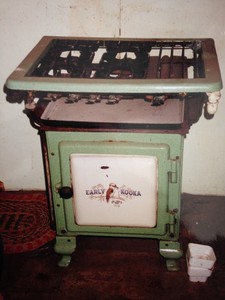
The cooktop in the house design, was gas as a standard addition, and I fondly remembered the teenage days of cooking on an ancient ‘Kooka’ gas stove, in my ‘haunted’ house – highly efficient and reliable. However….
Kooka Stove
I worked out pretty quickly that gas wasn’t great for someone living in the tropics. The phrase sweating away over a hot stove, was more real than I would care to admit, when I discovered the open flame of the gas cooktop, I was cooking with in my rental accommodation, caused the ambient temperature in the kitchen on a 36 degree celsius, overly humid, day to ignite to levels bordering on purgatory.
Thus, an upgrade to induction cooking seemed like a sensible move than a gas stove.
The new induction cooktop
The trouble is I had to purchase all new cookware as not all saucepans operate with the induction technology, which requires saucepans to be magnetic, to work.
I splurged a little and purchased two new non stick Induction friendly frypans, one a Raco and the second a Tefal Jamie Oliver style pan, as well as three beautiful induction freindly, non-stick saucepans, a lovely set made in France by Ingenio, with a detachable handle that could be used in the oven or cooktop, or served at the table.
So versatile, I thought.
Imagine my schock when I read that there was a problem with non-stick cookware.
A big problem….
Someone in the Estate by the Sea, where I live, had three parrots that lived inside their home. The owner was cleaning his self-cleaning oven, last week, which requires turning it to its maximum heat for an extended time in order to self clean the interior walls, of the oven.
Suddenly all three of his large parrots, including an African Grey parrot, (which can live to 200 years), developed breathing problems and died within 20 minutes of each other, ostensibly from the polytetrafluoroethylen fumes, emitted from the oven in its self-cleaning mode.
To back up his claim I did a little research:
…. the material used in most nonstick cookware, …the polytetrafluoroethylene (PTFE) coating on the pans turns into toxic Perfluorooctanoic acid (PFOA) at high heat, making it dangerous both for the cook and for diners.
It was in 2004 that the American Environmental Protection Agency (EPA) discovered the potential cancer-causing chemical used in the production of Teflon and filed complaints against the maker, DuPont.
At that time, a synthetic chemical called perfluorooctanoic acid, known as PFOA or C8 for short was used in the production of Teflon, however, it was phased out in the USA, in 2013 as PFAS chemicals, which includes PFOA and PFOS, had been linked to cancer and numerous other health concerns.
Despite DuPont completely eliminating the use of PFOA from use in their products, according to a spokesperson for the Australian Competition and Consumer Commission (ACCC), there is a wide range of products supplied in Australia that still include the related chemicals.
This week, I purchased a PFOA free frypan and worryingly note the Ingenio saucepans are now a discontinued product, in the larger retail stores. I shall have to ensure these saucepans are never used on high heat or should I ditch them and get stainless steel, all over again, for the Home by the Sea?
Do you use Non stick cookware, or use water resistant, stain resistant products?
How much better is it to source organic citrus fruit straight from the garden?
Fruit that you can be sure is free from pesticides and sprays, because you have picked it directly from your own backyard?
If you have only experienced food purchased from the supermarket, you don’t know what you’re missing. Home grown fruit is so much juicier. This applies to most foods, freshly sourced.
It is not as hard as you think to grow your own food, even with limited space.
Benefits of Growing Your Own Fruit
save on packaging waste with supermarket products
better nutritional goodness
increased levels of juiciness and palatability
using your property to productive use
promoting food sources for bees
Unfortunately, those sad supermarket lemons sit in freight or storage for two weeks, before hitting the supermarket shelves, and then spend far more time in the supermarket, itself. Finally, someone purchases them, takes them home and pops them in their fridge, so they could be up to one month old or older, when they use them for meals. Eeew? Not really nutritionally sound.
I don’t have the space for a garden and my soil quality is poor, I hear many lament.
Citrus trees, such as lemons, can be successfully grown in pots, as long as they are positioned in a sun drenched spot, in the garden or courtyard and a good citrus fertiliser added in Autumn.
Meet ‘Lemon Heaven’ – a new seedless variety of lemon tree.
It is the latest addition to the Home by the Sea.
If you live in Australia, a dose of citrus food in small amounts monthly from August to mid autumn will help the little tree along. I also added some Seasol to the pot to help the new addition settle into family life at the Home by the Sea.
Getting up early to go walking in summer, brings you some delightful surprises. And let’s face it, it is SO much cooler when you live in the sub-tropics. It is also a time when the animals are more active, as they too struggle in the heat and like to rest when the sun is high.
Like this family herd of Kangaroos. You won’t see any around at noon, as they will be resting in the shadows, but go walking early morning and you will see them, enjoying the free grass shoots that emerged with the recent god given rains.
Perhaps you will join me on this walk as we take a glimpse into Australian fauna.
Photo Cred: Facebook
The gorgeous roos were making the most of the recent rains and although you cannot see them in the photo, One mum has a baby, called a joey, which we have often seen at the newly created and yet to be used, sporting fields at theend of a nearby road. The roos seem to be co-existing well with the encroaching development. Let us hope it stays that way.
“One man’s trash can be another’s treasure.”
The rain gives happiness to animals and people alike. For me, rainfall and cooler days are invigorating. After years of drought, and months of never ending bushfires, the rainfall last week of showers and the occasional thunderstorm is so glorious in all its wetness! Truly manner from heaven. The drought may not be over but the grass and plants respond.
I often think about that disconnect between feelings about rain. The folks in the Northern hemisphere have had enough of it and down here we crave it more and more. There never seems to be enough, for all of Australia, or if there is, it comes down in bucketloads, far too much for us and our fragile land to absorb.
Do you get how we feel about rain in Australia?
The ducks and swans frolick in the overflowing pond, and yes, our feet get muddy.
Yet it is this lifegiving substance the earth needs to rejuvenate, to heal, for water is the essence of life.
With blue sky as far as the eye could see in the other direction, I turned and headed back home. By the lakeside, I was greeted by the local birds. They were really happy too. Except perhaps, the baby galah!
He was probably pretty hungry by the sound of his raucous call.
Along with all the other walkers around the globe, Jo’s Monday walksinspire me to share a little of my home by the sea with others around the globe.
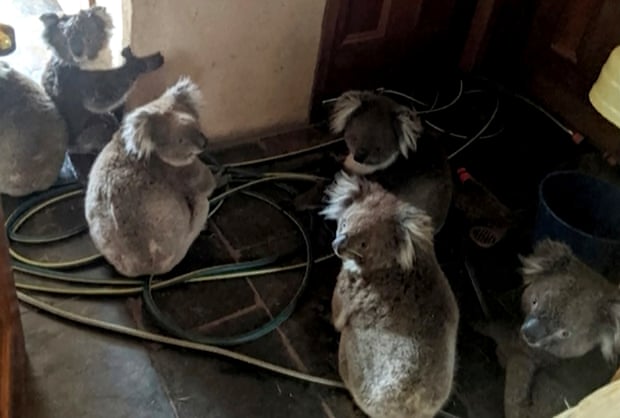
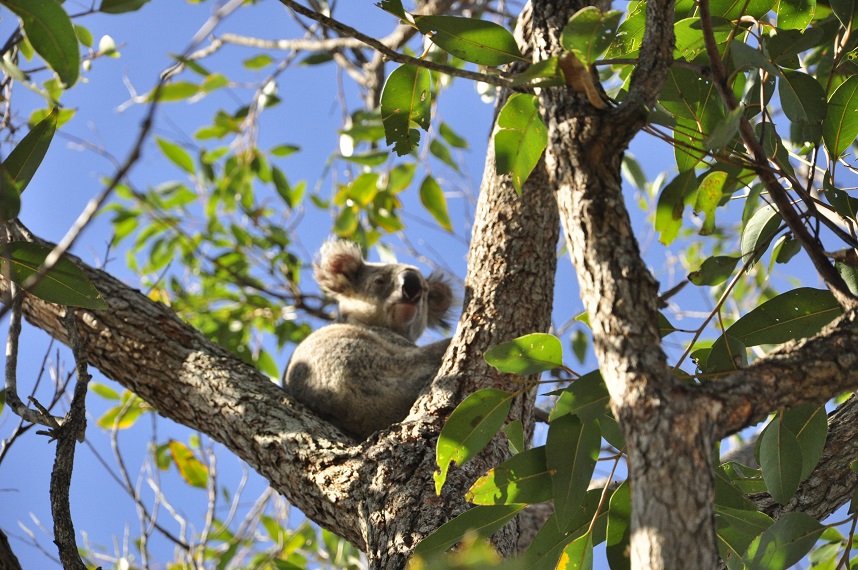
You know you are in Australia when you see a Koala in a tree! Australia’s unique marsupial is so specialized it only eats from around four species of Eucalypt trees. And it needs about 1 kilogram of them every day!
Koalas rescued during the South Australian bushfires Photograph: Adam Mudge/A
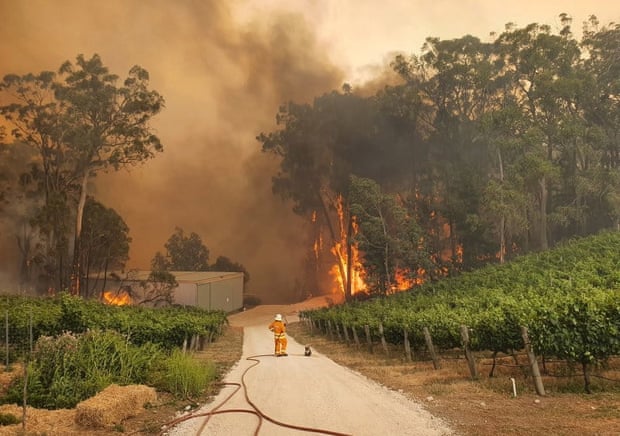
Koalas are super cute but they are endangered, and vulnerable to extinction and may potentially become extinct due to habitat loss, disease, limited interbreeding due to a declining population and more recently, significant bushfires in their natural habitat. At least 8000 koalas are thought to have died in the fires. We don’t know the real extent of loss.
Photograph: Eden Hills Country Fire Service/Facebook
We had koalas in our backyard trees, when I was a child, as we had tall Eucalypt trees. We had two males that were on the prowl looking for a mate, and were resting peacefully when the ranger came to collect them and take them back to the bush.
James Tremain, a spokesman for the NSW Nature Conservation Council, said in November that koala decline has been happening “slowly and silently.. and that Koala numbers have plunged over the past 20 years. According to the federal threatened species scientific committee koala numbers in two states have dropped 42% between 1990 and 2010.”
Guardian Australia
This is significant. How can a species, so specialized, stage a comeback when their food source, their only food source, is continually being cut down without replenishment? Residential areas that are cleared and developed, are not replanted with Eucalypt trees because they are too tall, continually drop branches and leaves and too large for back yards.
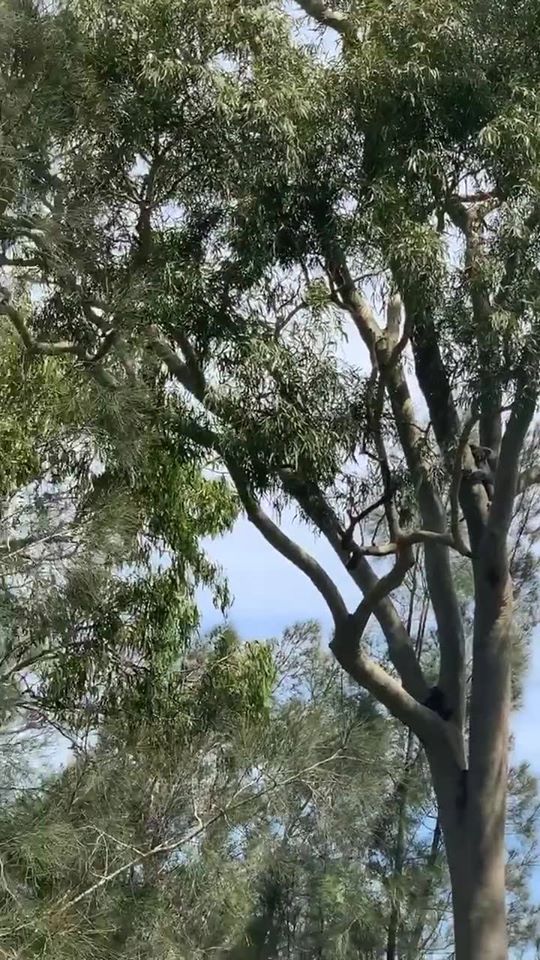
We have at least one resident koala in our estate – and we only have a few tall tress in the small Eco Zone between two large sporting fields and an estate of houses (without Eucalypt trees).So what will that wild koala go and what will they eat?
Can you see the koala?
Photograph – Facebook
Koala Facts
Koalas need oodles of sleep – around 18 hours. You would too, if you ate only one type of food all day, every day! That is why most of the time they are spotted in trees, they are sleeping.
You might be wondering how it survives on just gum leaves, as the oils in the leaves are quite poisonous. The Koalas have adapted to this specialized niche in the ecosystem, by having a very long digestive organ which allows them to break down the leaves and up til know were easily found throughout much of Eastern Australia. I spotted a few koalas on Stradbroke Island a few years ago.
The infant koala is called a Joey and it is pretty useless when it is born. Blind and earless when born the joey must use its strong sense of touch and smell, as well as natural instinct, to find its way into the pouch or face death. Being a marsupial it requires extended antenatal care that amounts to six to twelve months in its mother’s pouch, where it continues to grow and develop. After the first six months, the young koala will ride around on its Mother’s back until it reaches maturity.
I am kind of glad I am not a mumma koala!
Help for Koalas
Please support organizations that fund 24/7 care of wild koalas in trouble
Every day my daily walk takes me to the lake, usually with the resident Schnauzer in tow.
Who me? She says
It is a beautiful walk and the developer and Council maintain the street and pathways to a high standard. They want to sell the remaining blocks of vacant land, I guess.
What is very disappointing is that, each and every day, I find some plastic washed up by the shore of the lake.
Each day, I hope to find a clean and clear shoreline. Predominantly, I find plastic wrap for packs of single use plastic water bottles and plastic packets for food floating on the water or washed up on the rocks.
Each day, I remove this plastic and dispose of it in the rubbish bin; it’s just a few steps away.
In this small corner of the world, on just one corner of the lake’s shoreline, I am removing 2 – 10 pieces of plastic rubbish each and every day. So, let’s put that in a global context:
“Every year, about 8 million tons of plastic waste escapes into the oceans from coastal nations. That’s the equivalent of setting five garbage bags full of trash on every foot of coastline around the world.” (EACH YEAR!)
Plastic pollution has become one of the most pressing environmental issues, as rapidly increasing production of disposable plastic products overwhelms the world’s ability to deal with them.
Single-use plastics account for 40 percent of the plastic produced every year. Many of these products, such as plastic bags and food wrappers, have a lifespan of mere minutes to hours, yet they may persist in the environment for hundreds of years.
Some plastic contain additives to make them stronger and in doing so, extends their life meaning they will take up to 400 years to break down. At the rate plastic is being produced, we will be drowning in plastic, in 400 years.
Plastics – Key Facts
Half of all plastics ever manufactured have been made in the last 15 years.
Production increased exponentially, from 2.3 million tons in 1950 to 448 million tons by 2015. Production is expected to double by 2050.
Trash is also carried to sea by major rivers, which act as conveyor belts, picking up more and more trash as they move downstream. Once at sea, much of the plastic trash remains in coastal waters. But once caught up in ocean currents, it can be transported around the world.
Creates Pollution of waterways from chemicals entering ground water
Land Pollution from Landfill
Expels air pollitspollutathe manufacturing process
It Kills Animals – seabirds and fish get caught inside or around it
It is Poisonous – to humans and animals
It is Expensive – it costs more to produce than a reusable natural bag
I will be keeping a count of the days without plastic.
How You Can Help
Responsibly dispose of plastic pollution when you find it in your local area
Say No to Plastic bags from shops
Use re-useable cloth or string bags
Refuse products with excess packaging
Ask if the packaging is reuseable PRIOR to purchase- especially with take away food, smoothies, coffees and drinks, so that business owners try to be more selective in their product choice
Carry a refillable drink or coffee flask and reusable straws
Don’t buy bottled water – or drinks in plastic bottles – preference glass containers where possible
Be responsible with your own rubbish when out and about
In Japan, I never saw a single item of rubbish in the streets. The Japanese are very conscious of taking their own rubbish away with them.
If the Japanese can do it with their mega population, we can do it too.
Let’s change the culture of plastic reliance everywhere!












 A Home by the Sea
You must be logged in to post a comment.