

Tag: australia

A Oh-so Light Lemon Cake
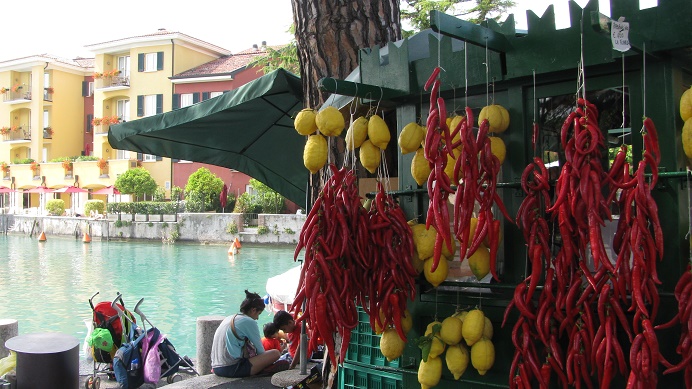
With the onset of winter in the south and spring in the north, adding lemons in some form to your diet is a good practice.
From the blog archives of Tidious Ted, an old blogger friend:
An amazing lemon cake made from an old recipe.

The cake is soft and light, somewhere between a sponge and madeira. Yet it has the fresh and delicious taste of lemon.
Lemon Cake Recipe
Ingredients
- 150 g [5,3 oz] butter
- 3 Eggs
- 300 g [10,5 oz] sugar
- Grated peel of one lemon
- 2 dl [0,4 pint] milk
- 300 g [10,5 oz] sifted flour
- 2 teaspoons baking powder
Lemon Icing:
- Icing Sugar
- Lemon Juice
Method:
[1] Stir butter and sugar until airy and white.
[2] Add one egg at a time, then lemon peel and flour alternately with milk.
[3] Pour the batter into two small oblong cake moulds or one deep round cake* mould with a diameter of 24 cm / 9,5 in. Beware this makes a large cake!
[4] Bake at 150° C / 300° F for about 45 minutes.
[5] Spread the icing over a cooled cake before serving.
NB* I used a cupcake tray and a large Kugelhopf/Bundt Cake Mould.
The Original recipe from Tidious Ted’s Recipereminiscing blog an old blog now lost to the wordpress archives.

Sunday Waves


Sunday Morning by the Water


Kayaking and Visiting Lake Kurwongbah

We’ve had a family member’s kayak on loan for a while, but rarely taken it out because you know, life is mostly busy. There is always places to go, people to see, things to do, so kayaking was left on the back burner.
Finally a day arrives when we are free and the weather conditions are not right. I am too old to be paddling a kayak in gusty winds, where endurance and stamina are fundamentally necessary to get you back to shore! I don’t want the helicopter search and rescue to have to save me!
Last week, the weather was excellent.
Early morning, we loaded the kayak on the roof racks, with some difficulty and set off to Kayak on Lake Kurwongbah, in nearby Kallangur!

Lake Kurwongbah is a freshwater lake that supplies water to the Northern suburbs of Greater Brisbane. It was initially constructed to supply water to a paper mill in the 1950s.
Water skiing and paddle craft are permitted on the lake. Fishing, although restricted to paddle craft was introduced several years ago as part of the program to reduce a resident population of Tilapia, an introduced noxious pest fish that is considered detrimental to our native fisheries.
Close to the shores of the lake, the presence of Waterweed and Water Lillies meant my paddle frequently got entangled around my paddle so I wondered whether this indicated there might be a nutrient run-off issue into the lake; fertiliser perhaps from surrounding suburban areas?
Fun Fact about Lake Kurwongbah
The naming of Lake Kurwongbah was the subject of a newspaper competition in 1958. The winning entry was Kurwongbah which is the Indigenous name for Sideling Creek; Kurwongbah means “black duck”.
http://prfma.com.au/lakes/lake-kurwongbah/
Picnic Spots at Lake Kurwongbah
The area is very popular on weekends and holidays as a picnic spot. There are shelters and electric barbecues. Parking is limited within the grounds, but there are plenty of extra spots on the main roads accessing the area.

Fish Stocks at Lake Kurwongbah
Since 2008, Lake Kurwongbah has been stocked with native fish and the following species might be found there:
• Australian Bass
• Yellow Belly (Golden Perch)
• Mary River Cod
• Snub Nose Gar
• Saratoga
Redclaw yabbies have been introduced and are not native to the area and should not be re-released if caught.
I may be getting too old to hoist the kayak on the SUV roof racks but the promise of Redclaw is tempting. Red Claw are a bit like a large prawn or scampi in flavour. This makes me want to get a crab pot and see if I can snag some!
Until next time, have a wonderful week.

Frogs and Reptile Biodiversity in My Local Area
Meet Fred the Frog. He is a Green Tree Frog.
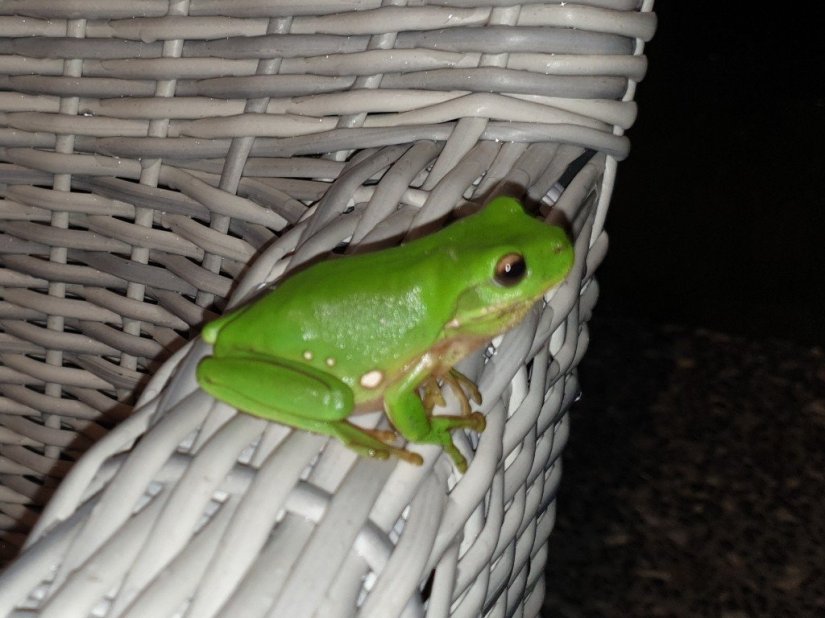
Fred and a few of his friends and family have been renting out space in our backyard.
They are very welcome although the dogs are not happy they are our tenants at the Home by the Sea.
The frogs try to get the favourite spot on the edge of the potplant as this helps them catch the moths that frequent our lawn at night, as modelled here by Esmeralda.

Australian Green Tree Frogs
These frogs have an ability to change the colour of their skin according to the surface they are sitting on. Sometimes bright green, othertimes brown.
Their skin also emits secretions should they be eaten by a predator. The secretions in the skin taste awful and make a predator, such as a dog vomit, and suffer depression for up to 60 minutes.

Of course, the dogs had to test the theory. The new puppy couldn’t resist picking the frog up in its mouth. As well as the protective secretions, frogs have another defence. They scream, they wail. It is a sound that brings us running to rescue them. But we don’t touch them!
Safety with Frogs
Human TOUCH can burn a frog’s skin if we pick it up with dry hands.
WET YOUR HANDS WHEN HANDLING A FROG.
[And do not touch toads without gloves. They are toxic!]
The vomit has been cleaned up and the depression lasted for a hour. A textbook example of the frog’s skin secretions at work, protecting it from being eaten by predators.
Here is a list of the frogs found in our area. At present we have around 8 -10 in our yard. The recent rains have delighted them.
| 1. | Limnodynastes peronii : Brown-striped Frog | 6 |
| 2. | Limnodynastes terraereginae : Northern Banjo Frog | 1 |
| 3. | Litoria caerulea : Green Tree Frog | 4 |
| 4. | Litoria fallax : Eastern Dwarf Tree Frog | 3 |
| 5. | Litoria gracilenta : Dainty Green Tree Frog | 4 |
| 6. | Platyplectrum ornatum : Ornate Burrowing Frog | 2 |
| 7. | Pseudophryne major : Large Toadlet | 4 |
| 8. | Rhinella marina : Cane Toad | 5 |


Last photo challenge
Foggy days at the Home by the Sea are rare. This one was a delight.

I am a fan of foggy weather, you see. Walking through a fog is an ethereal experience for me. Perhaps it reminds me of my beloved Denmark?
Post the last photofor October from your chosen device.
Brian at Bushboys blog will explain more on the challenge.

A Historic Third Term for A Female Leader
During a fierce thunderstorm and amidst a global pandemic, a female political leader, has made a mark on history winning a historic third term as the state’s leader in the election.
And her words I particularly like – she is keen to get back to work as soon as possible.
“There’s nothing more important than the dignity of work.”
Anastacia Palaszczuk
.

My wonderful daughter strongly believes and supports female representation in politics. For many years, female suffrage was not tenable to the authorities. Some women died for the right to vote. My daughter takes her constitiutional right very seriously. She requested a political sign for our garden. After all, we make up a little more than half the population, she reasons.
Women’s Right to Vote
New Zealand was the first self-governing country in the world in which all women had the right to vote in, but not to stand for, parliamentary elections in 1893.
The colony of South Australia allowed women to vote and stand for election in 1894. In Sweden, conditional women’s suffrage was granted during the age of liberty between 1718 and 1772. But it wasn’t until the year 1919 that equality was achieved, where women’s votes were valued the same as a man’s.
Wikipedia
Equity in something my countrymen and women feel strongly about but might hardly be aware that they do. Generally speaking Australia does not have many traditions, we can all our own, but for Australian society is mostly classless and everyone here is entitled, to use the vernacular: a ‘fair go’. Australia has developed, comparatively speaking a more egalitarian and economically mobile society, perhaps stemming somewhat from a lack of historic tribal associations. (generally speaking)
However, this is not to dismiss the extreme prejudice and terrible injustices wrought against the indigenous folk of Australia and the White Australia Policy. This racist policy of preferencing white migrants was a mid-twentieth century policy based on the irrational fear of becoming populated by migrants from Asia.
There will always be bad eggs in any society, just as there will be good eggs. I do believe that the worst of any prejudice is behind our country and trust my daughter will grow old in a country where each individual is taken for his or herself, with open-mindedness and in good faith.
“A cynical sneer gains no ground.”

Storm Season

In this neck of the subtropical woods, it is the season for thunderstorms. Cells build in the Brisbane Valley and head southeast, sometimes bringing hail but always damaging winds.

The lightning can be spectacular but frightening if you are driving or caught outside.
Our dogs are fine but some dogs become so fearful they panic at the sound of thunder and run away.

There is even such a thing as thunderstorm asthma. Usually this occurs in the southern part of Australia, such as Victoria. Thunderstorm asthma caused 10 deaths and 300 hospital admissions last year in the one storm event.
Coming tonight, the storms put a bit of a kybosh on Halloween festivities. Our estate has bee
n quite enthusiastic at Halloween decorating this year so I am half expecting a skeleton, Halloween entity or witch to come flying over the fence for real.

From the Home by the Sea.


Gardening with Alkaline Soils in Coastal Areas

Having a home by the sea has many advantages, however, one disadvantage, is the poor quality of the soils for gardens and the difficulty in growing plants that thrive in coastal areas.
Coastal soils are often sandy and have poor water retention ability but might also be heavy, salty and highly alkaline. This means their PH level is about 7 or above, which makes growing plants quite tricky.

If I wanted to grow Azaleas, Camellias, Magnolias or my favourite flowering shrub: Gardenias, for example, the coastal soils would need organic and chemical* help.
*Please note growing azaleas, camellias, magnolia and gardenias will require a specific fertilizer or may wither or develop yellowing leaves, without the right conditions.
As some of my garden had already been established, adding large quantities of peat moss, compost or organic matter wasn’t going to be a viable option, so in order to change the PH of the soil, I needed to look at other options.
It’s always best to test the soil’s pH level and follow instructions to the “T” when using anything to change soil pH.
If your soil is highly alkaline, adding sulphur, peat moss, sawdust, or aluminium sulfate can help neutralize it.
Adjust soil pH slowly, over time, avoiding any quick fixes. You can simply add plants suitable for alkaline soil. Read more about Plants For Alkaline Soils
https://www.gardeningknowhow.com/garden-how-to/soil-fertilizers/plants-for-alkaline-soil.htm
Damage to Plants from High Ph Levels
The first warning sign that the plants in my garden were suffering from a high Ph level was leaves turning yellow with a green midvein, evident firstly with the alkaline sensitive Gardenias and later, the Murraya, or Mock Orange, and some of the small Cupheas bordering the garden.

My next step in remediation was to stabilize the Gardenia, in situ, with an appropriate chemical fertilizer suitable for the sensitive likes of those plants and plant out more alkaline-tolerant species, as well as add organic matter where possible.

Within a few weeks of applying the fertilizer, the Gardenias and Magnolia had shiny new green growth. I applied a general fertilizer to the Murraya and the Cupheas and although slower, they are responding with new buds.
Growing Lavender in Coastal Areas
Lavender plants are a sound choice for coastal areas as they relish well-drained sandy soils and don’t mind wind. The ones I planted thrived in soil that had an upper layer of very sandy alkaline loam with an underlying, also alkaline, clay. They are especially beautiful now, in full bloom. No fertilizer needed, or signs of alkaline damage, so far.

Lavender plants make spectacular borders and vary in height: Lavender dentata, for example, grows to a height of 60 cm and can be pruned to a ball shape lightly after flowering.
Growing Your Own Lavender Plants
Lavender blossoms make excellent cut flowers,or can be used in dried flowers arrangements or potpourri. After flowering, I remove the lavender flowers from the stems and pot up the trimmed down leaf tips and place them in potting mix after first dipping the ends in rooting powder and then seal them with a plastic bag for several months. After that, you should have some established new Lavender plants.
It’s really a plant that keep on giving.

Lavender is known for its therapeutic properties.
Growing Olive Trees in Coastal Areas
Contrary to popular belief, Olive trees do not really have troublesome root systems, and as they do like coastal conditions they can also tolerate alkaline soil, well, provided it is free draining. A great choice for a coastal garden particularly with their grey-green foliage.

Olive trees take about 7 years to produce fruit. Sadly, we had to leave a beautiful olive tree at our former location, when we moved to the ‘Home by the sea,’ one that was close to flowering and producing olives.
The tree was about five years old and about 3 metres tall. It was not in a position of full sun, but we do live in the sub-tropics, so the sun is stronger here. Olive trees seem resilient to pests, so are a great choice for coastal and Mediterranean-style climates.
Plants suitable for Alkaline soils:
Some other plants that cope well in Alkaline soil types are listed below.
Herbs/Vegetables for Alkaline Soils
- Thyme
- Parsley
- Oregano
- Asparagus
- Sweet Potato – my plants are thriving. Just pop them in and watch them grow.
- Beets
- Cabbage
- Cauliflower
- Cucumber
- Celery
Parsley can be used as an edible border plant as it is a splash of greenery and handy for use in making Tabouli or salads in the kitchen. It is a herb that does like alkaline soils.


Shrubs and Trees for Alkaline Soils
- Viburnum
- Cotoneaster
- Mock Orange
- Honeysuckle
- Spiraea
- Hydrangea
- Lavender
- Rosemary
- Juniper
- Olive Trees – as long as the soil is free draining.
Enjoy creating a Coastal Garden
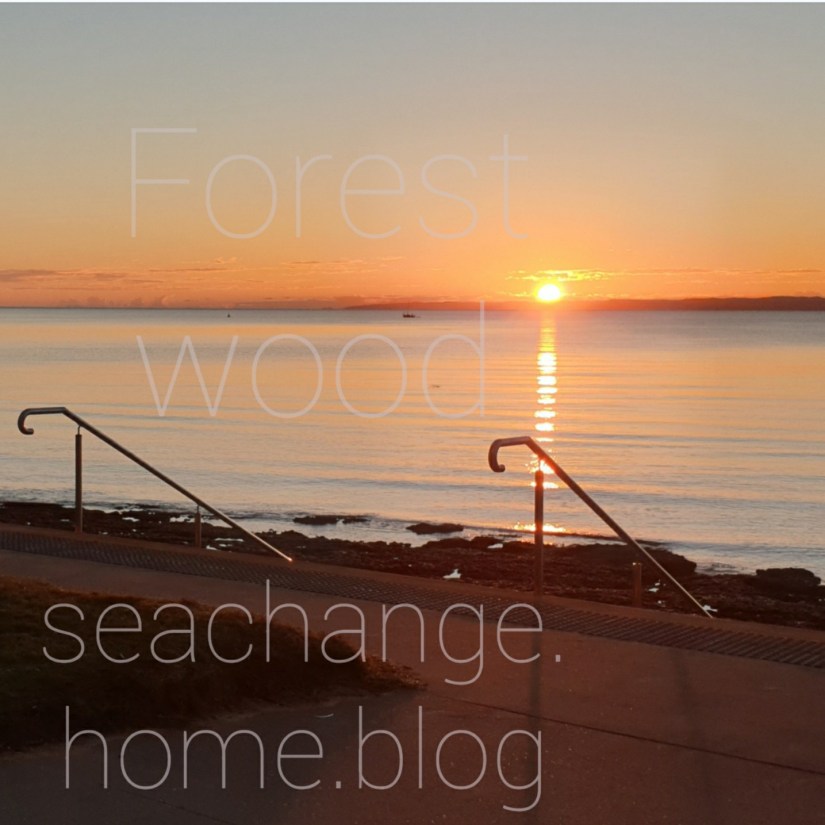
 A Home by the Sea
You must be logged in to post a comment.